“Frederick Douglass: Prophet of Freedom” named one of the 10 Best Books of 2018 by the New York Times.
Read MoreThe 10 Best Books of 2018 | New York Times
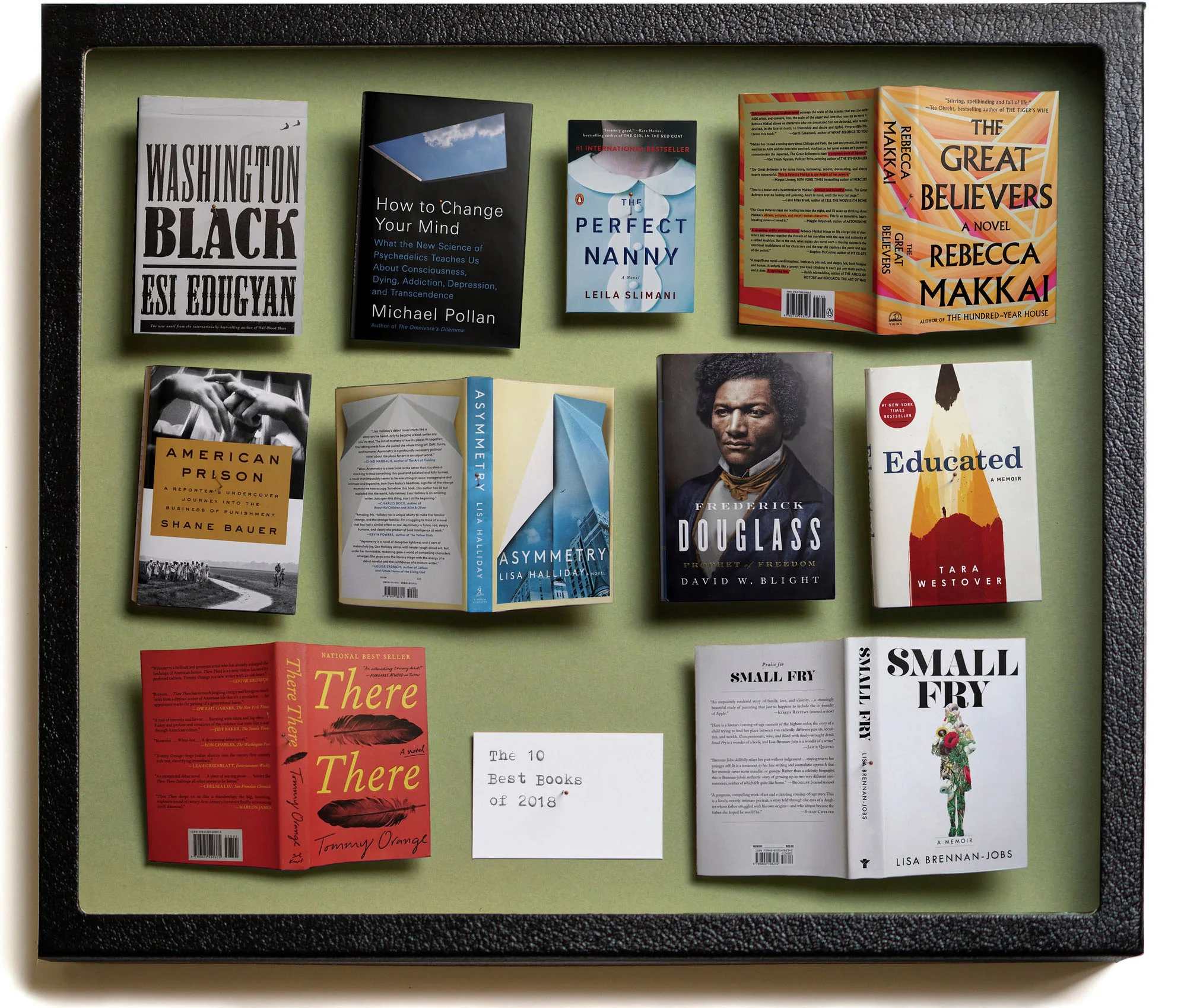
“Frederick Douglass: Prophet of Freedom” named one of the 10 Best Books of 2018 by the New York Times.
Read More
Frederick Douglass in 1867. James Presley Ball/Cincinnati Museum Center, via Getty Images
In the introduction to Frederick Douglass’s second autobiography, “My Bondage and My Freedom,” published in 1855, his friend James McCune Smith wrote that if a stranger landed in the United States and sought out its most prominent men by using newspapers and telegraph messages, he would discover Douglass. Born a slave in Maryland, Douglass had escaped to the North to become a renowned abolitionist orator and writer. He was, Smith said, the sort of person people would ask, “‘Tell me your thought!’ And somehow or other, revolution seemed to follow in his wake.”
Read More
Frederick Douglass, c1866. Photograph: Granger/REX/Shutterstock
David Blight arrives in New York pulling his carry-on luggage, en route from Washington, soon to fly onwards to San Francisco. Such is the interest in his new biography of Frederick Douglass, a book 10 years in the writing and a whole career in the making, he will be on the road till December.
He takes off his lovingly battered Michigan State cap, picks up a coffee and sits down for another conversation.
Read More
David Blight, author of “Frederick Douglass: Prophet of Freedom,” speaks with The Washington Post’s Jonathan Capehart during an interview for the “Cape Up” podcast on Oct. 2 at the WNYC radio studios in New York City.
David Blight, author of “Frederick Douglass: Prophet of Freedom,” speaks with The Washington Post’s Jonathan Capehart during an interview for the “Cape Up” podcast on Oct. 2 at the WNYC radio studios in New York City.
Listen to the podcast: https://www.washingtonpost.com/podcasts/cape-up/what-trump-needs-to-learn-about-frederick-douglass/?utm_term=.f88c7ce5ea30
Read More
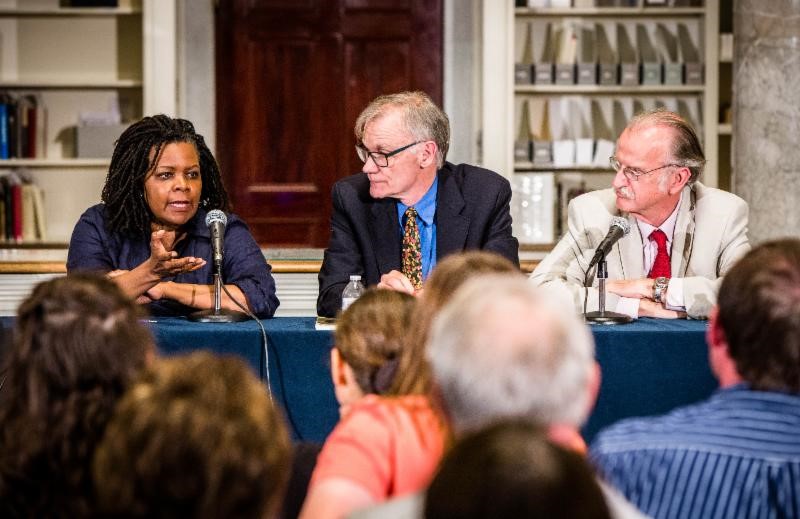
Penn State professor Lori Ginzberg and Yale University professor David Blight listen during a Faith & Politics panel in Geneva, N.Y., on July 21. (Chantale Wong/Faith & Politics Institute)
With President Trump in the White House, everything seems under assault. Civil rights, the rule of law, our moral standing, the global liberal democratic order the United States spent decades, blood and treasure helping to form and maintain. It’s all so precarious, unsettled and unprecedented. But is it, really?
During the pilgrimage with the Faith & Politics Institute last weekend to western New York state and the landmarks of the abolition and women’s suffrage movements that were centered there, we were reminded that these dark days are neither new nor insurmountable. The scene was a panel I moderated with Rep. Tom Reed (R-N.Y.), Rep. Carolyn B. Maloney (D-N.Y.) and two history professors.
Read More
In Kevin Powers’ haunting second novel, “A Shout in the Ruins,” the Civil War and the destruction of slavery are a slow, multigenerational earthquake. The book sizzles with authentic tragedy, realism and unreconciled memory. There is no place for glory in this novel, which reveals black and white Southerners along the Virginia-North Carolina border region in two distinct time periods (the 1860s and 1950s-80s) living as though the past is never over.
Read MoreHistorians Peter Onuf, David Blight and Annette Gordon-Reed discussed defining equality and the Declaration of Independence.
View video: https://www.c-span.org/video/?446262-2/declaration-independence-defining-equality
Read More
The Root, May 28, 2018, video interview with David Blight about the origins of Memorial Day.
View video: https://www.theroot.com/black-people-created-memorial-day-literally-1826334056
Read More
David Blight received an award for his commitment to ensuring excellence and equity in graduate education at the Annual Yale Bouchet Conference on Diversity and Graduate Education at Yale University on Saturday, April 28, 2018.
Read More
For a century and a half Ulysses S. Grant has been a baffling and inspiring presence in the American literary and historical imaginations. Born in 1822 and raised by a pious Methodist mother, as a young man he was quiet, given to depressions, and lacking much ambition. Only his love of horses seemed to animate him and give him a reason to excel in his education at West Point, which his scheming father desired for him more than he did. In his thirties, he was a complete failure, at times a drunkard, destined to die forgotten. He found his vocation and success on America’s killing fields; his meteoric trajectory in the Civil War makes him a remarkable case of a nobody who became almost everything.
Read More
The Gilder Lehrman Center for the Study of Slavery, Resistance, and Abolition celebrated the 20th anniversary of its founding last Friday with a panel discussion on the life of Frederick Douglass, whose 200th birthday was also last week.
Read More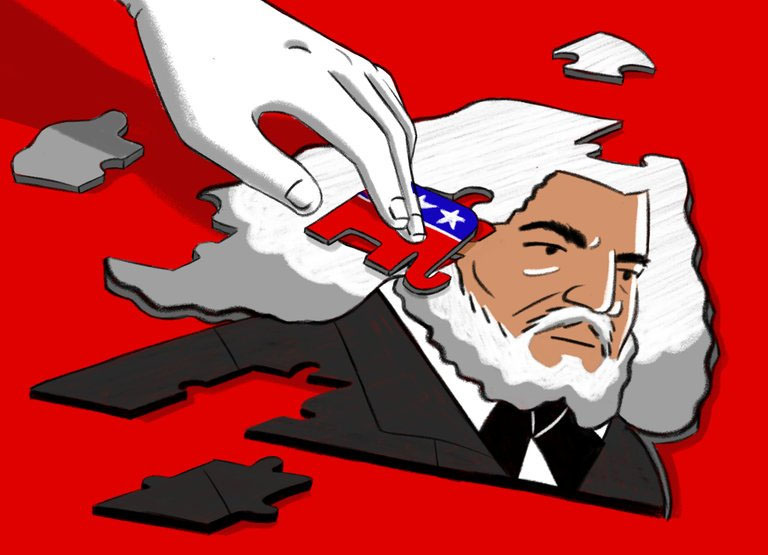
Shannon Wright
Two hundred years ago, one of the most important Americans was born close to the Tuckahoe River on the Eastern Shore of Maryland. Frederick Bailey didn’t know the exact date of his birth, so he chose Feb. 14. Twenty years later, when he escaped from slavery, he became Frederick Douglass. By the time of his death in 1895, he had become one of the greatest orators and writers of the century.
Read More

David Blight and Thavolia Glymph explored the meaning of freedom, equality and emancipation with moderator Michael Gerhardt, as part of the National Constitution Center's celebration of the 150th anniversary of the 14th Amendment to the Constitution.
View video: https://constitutioncenter.org/debate/past-programs/freedom-equality-and-emancipation
Read More
Gabriella Demczuk for Vox
In recent months, I have grown obsessed with a seemingly simple question: Does the American political system have a remedy if we elect the wrong person to be president? There are clear answers if we elect a criminal, or if the president falls into a coma. But what if we just make a hiring mistake, as companies do all the time? What if we elect someone who proves himself or herself unfit for office — impulsive, conspiratorial, undisciplined, destructive, cruel?
Read More
Gettysburg | Photo by Britt Reints, CC via Flickr, http://bit.ly/2zOg9Cr
“Radio West” Utah Public Radio podcast with David Blight about the history versus the memory of the Civil War.
Listen to audio: http://radiowest.kuer.org/post/remembering-civil-war?
Read More
Laura Ingraham's interview with White House Chief of Staff John F. Kelly on Fox News Channel, Monday, October 30, 2017.
White House Chief of Staff John F. Kelly was the guest for the premiere of Laura Ingraham’s new show on Fox News Channel on Monday night. During the interview, he outlined a view of the history of the Civil War that historians described as “strange,” “highly provocative,” “dangerous” and “kind of depressing.”
Read More
John F. Kelly’s comments praising General Robert E. Lee and saying a lack of compromise led to the Civil War stirred intense reactions among historians. Credit Matt Eich for The New York Times
Two months after President Trump stirred fierce debate with a defense of Confederate monuments, his chief of staff, John F. Kelly, has waded back into the fray of Civil War history.
Read More
Crowd in Pittsburgh rallies against hate MARK DIXON / CREATIVE COMMONS
Listen to audio: http://wnpr.org/post/confronting-hate-tolerance-intolerance-and-rise-white-nationalism
Read More

Maine Gov. Paul LePage Photo by SARAH RICE/GETTY
(CNN) Maine Gov. Paul LePage defended monuments to the Confederacy in a radio interview on Tuesday, claiming that 7,600 Mainers fought for the South and that the war was initially about land, not slavery.
Two Civil War historians contacted by told CNN disputed LePage's assertions.
Read More
Confederate statues removed from the University of Texas’s campus in Austin were secured to a trailer early Monday. ERIC GAY/ASSOCIATED PRESS
As universities and municipalities rush to remove Confederate monuments, many historians have been stunned. For decades, they say, it was difficult to even broach the idea that the monuments were symbols of white supremacy. Public sentiment, they said, would not allow it.
“I never thought I’d live to see these monuments coming down,” said David Blight, a Yale University historian of the Civil War and Reconstruction.
Read More