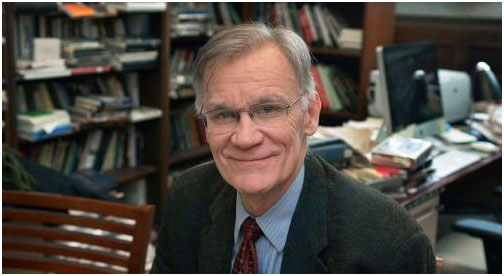
“Radio West” Utah Public Radio podcast with David Blight about the history versus the memory of the Civil War.
Listen to audio: http://radiowest.kuer.org/post/remembering-civil-war?
Read More
Gettysburg | Photo by Britt Reints, CC via Flickr, http://bit.ly/2zOg9Cr
“Radio West” Utah Public Radio podcast with David Blight about the history versus the memory of the Civil War.
Listen to audio: http://radiowest.kuer.org/post/remembering-civil-war?
Read More
Laura Ingraham's interview with White House Chief of Staff John F. Kelly on Fox News Channel, Monday, October 30, 2017.
White House Chief of Staff John F. Kelly was the guest for the premiere of Laura Ingraham’s new show on Fox News Channel on Monday night. During the interview, he outlined a view of the history of the Civil War that historians described as “strange,” “highly provocative,” “dangerous” and “kind of depressing.”
Read More
John F. Kelly’s comments praising General Robert E. Lee and saying a lack of compromise led to the Civil War stirred intense reactions among historians. Credit Matt Eich for The New York Times
Two months after President Trump stirred fierce debate with a defense of Confederate monuments, his chief of staff, John F. Kelly, has waded back into the fray of Civil War history.
Read More
Crowd in Pittsburgh rallies against hate MARK DIXON / CREATIVE COMMONS
Listen to audio: http://wnpr.org/post/confronting-hate-tolerance-intolerance-and-rise-white-nationalism
Read More

Maine Gov. Paul LePage Photo by SARAH RICE/GETTY
(CNN) Maine Gov. Paul LePage defended monuments to the Confederacy in a radio interview on Tuesday, claiming that 7,600 Mainers fought for the South and that the war was initially about land, not slavery.
Two Civil War historians contacted by told CNN disputed LePage's assertions.
Read More
Confederate statues removed from the University of Texas’s campus in Austin were secured to a trailer early Monday. ERIC GAY/ASSOCIATED PRESS
As universities and municipalities rush to remove Confederate monuments, many historians have been stunned. For decades, they say, it was difficult to even broach the idea that the monuments were symbols of white supremacy. Public sentiment, they said, would not allow it.
“I never thought I’d live to see these monuments coming down,” said David Blight, a Yale University historian of the Civil War and Reconstruction.
Read More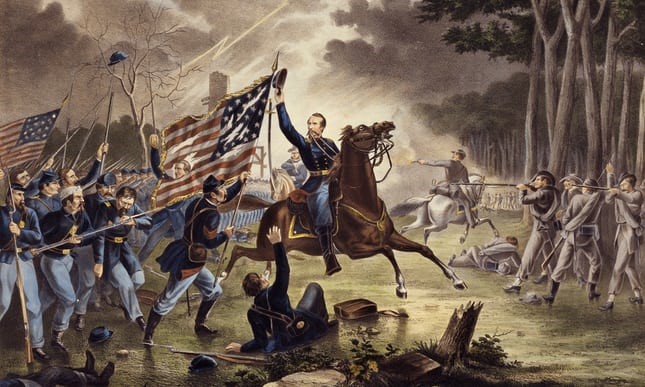
General Kearny’s gallant charge at the Battle of Chantilly, painted by Augustus Tholey. Kearny mistakenly rode into the Confederate lines and was killed.
Photograph: UniversalImagesGroup/Getty Images
“I tremble for my country when I reflect that God is just,” Thomas Jefferson wrote in 1781. The American revolution still raged, many of his own slaves had escaped, his beloved Virginia teetered on social and political chaos. Jefferson, who had crafted the Declaration of Independence for this fledgling nation at war with the world’s strongest empire, felt deeply worried about whether his new country could survive with slavery, much less the war against Britain. Slavery was a system, said Jefferson, “daily exercised in tyranny,” with slaveholders practicing “unremitting despotism”, and the slaves a “degrading submission”.
Read More
Photograph by Glenna Gordon for The New Yorker
A day after the brawling and racist brutality and deaths in Virginia, Governor Terry McAuliffe asked, “How did we get to this place?” The more relevant question after Charlottesville—and other deadly episodes in Ferguson, Charleston, Dallas, St. Paul, Baltimore, Baton Rouge, and Alexandria—is where the United States is headed. How fragile is the Union, our republic, and a country that has long been considered the world’s most stable democracy?
Read More
The statue of Confederate Gen. Robert E. Lee in the center of Emancipation Park the day after the Unite the Right rally devolved into violence August 13, 2017 in Charlottesville, Virginia. The Charlottesville City Council voted to remove the statue and change the name of the space from Lee Park to Emancipation Park, sparking protests from members of the ‘alt-right.’ (Credit: Chip Somodevilla/Getty Images)
The reason the South fought the American Civil War has been contested ever since the Confederacy surrendered in 1865. An odd turn of events, considering that when 11 Southern states seceded from the Union at the war’s outset, they were very clear about why they were doing it.
Read MoreOn June 21, 2017, Gilder Lehrman Center Director David Blight and GLC summer intern Ry Walker (YC 2020) addressed a group of elementary, middle, and high school teachers at a New Haven monument to the 29th Regiment, Connecticut Volunteer Infantry. The teachers were participants in a seminar taught by Prof. Blight called “The Life and Writings of Frederick Douglass.” The seminar was organized by the Gilder Lehrman Institute of American History. Ms. Walker is a rising sophomore at Yale University. Through the Afro-American Cultural Center’s History Keepers Program, she was interning with the GLC for the month of June.
Read More
Ever since Donald Trump became President I have believed his greatest threat to our society and to our democracy is not necessarily his authoritarianism, but his essential ignorance - of history, of policy, of political process, of the Constitution. Saying that if Andrew Jackson had been around we might not have had the Civil War is like saying that one strong, aggressive leader can shape, prevent, or move history however he wishes well into the future.
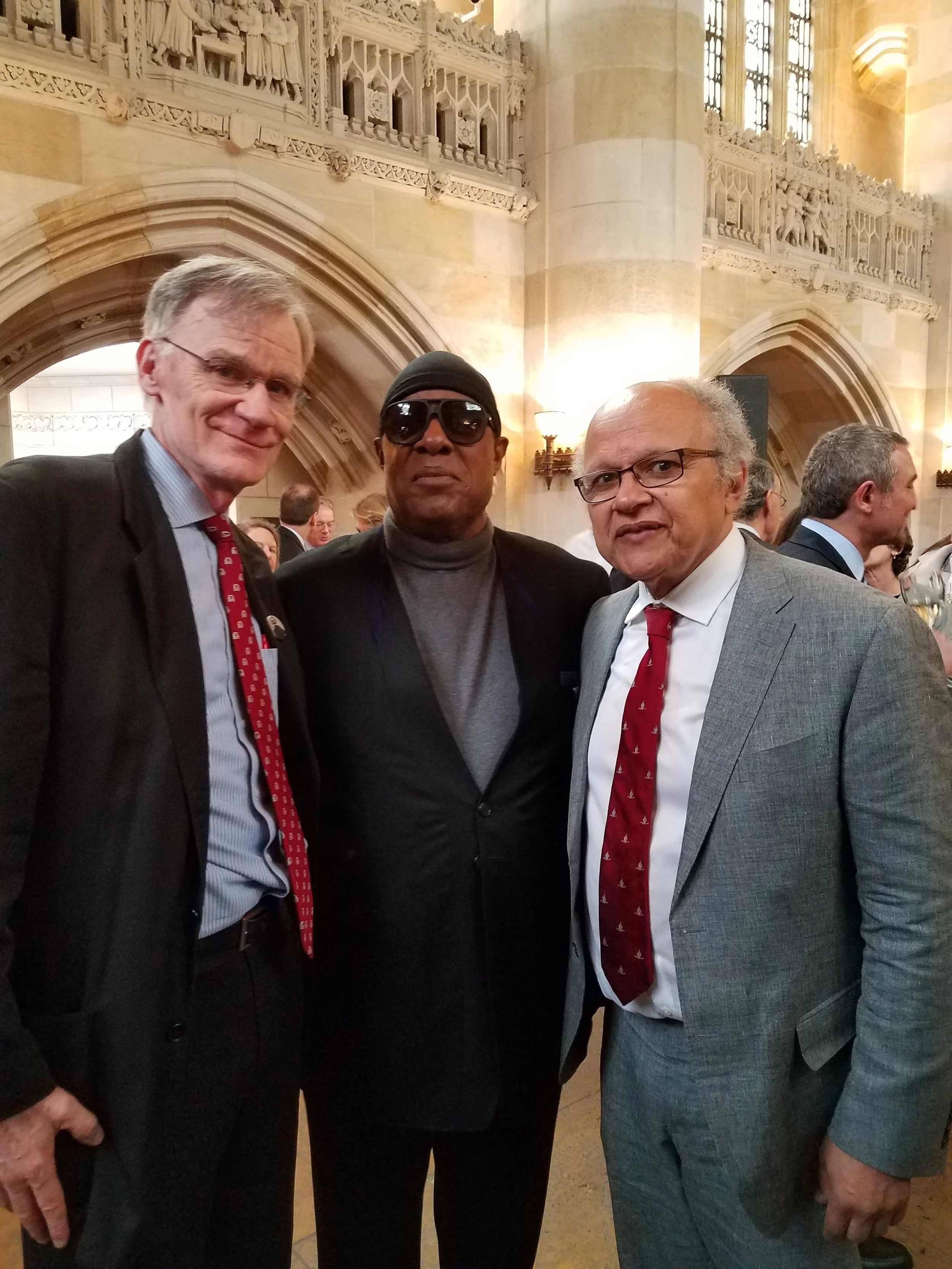
Read MoreStevie Wonder received an honorary Doctorate of Music degree on Monday, May 22nd, at Yale University’s 316th commencement. David Blight, along with Frank Snowden, Professor of History & History of Medicine at Yale, had a chance to speak with Stevie Wonder at the luncheon following the commencement ceremony.
Read MoreDavid Blight with students from the Stratton Mountain School in Vermont and their teacher Reid Smith, after Blight's lecture, “The Civil War, Race and Reunion,” at the First Congregational Church of Manchester, VT on Wednesday, May 3, 2017.
Read More
Trump has displayed an affinity for Jackson in the past GETTY IMAGES
From the BBC: President Trump has caused controversy with a revisionist riff on Civil War history, telling journalist Salena Zito in an interview that Andrew Jackson could have prevented the war if he’d been president a little later, and that Jackson was “really angry” as he watched it unfold.
Jackson, a slave-owner and strongman who took office in 1829, died 16 years before the war began.
We asked three prominent Civil War historians - David Blight, from Yale; Judith Geisberg, from Villanova University; and Jim Grossman, from the American Historical Association - to parse Trump’s comments, line by line.
Read MoreDavid Blight has been chosen to receive the Graduate Mentor Award for the Humanities at the Yale University Graduate School’s Convocation Ceremony the weekend before commencement.
Read MoreMore than 30 years ago, Yale historian David Blight stood high atop a ridge near the Maryland coast and took in a view, the memory of which still awes him.
It was of the Chesapeake Bay in the summer, dotted with the white sails of boats, from a vantage point described more than 100 years earlier by the famed former slave, abolitionist, and orator Frederick Douglass.
Read More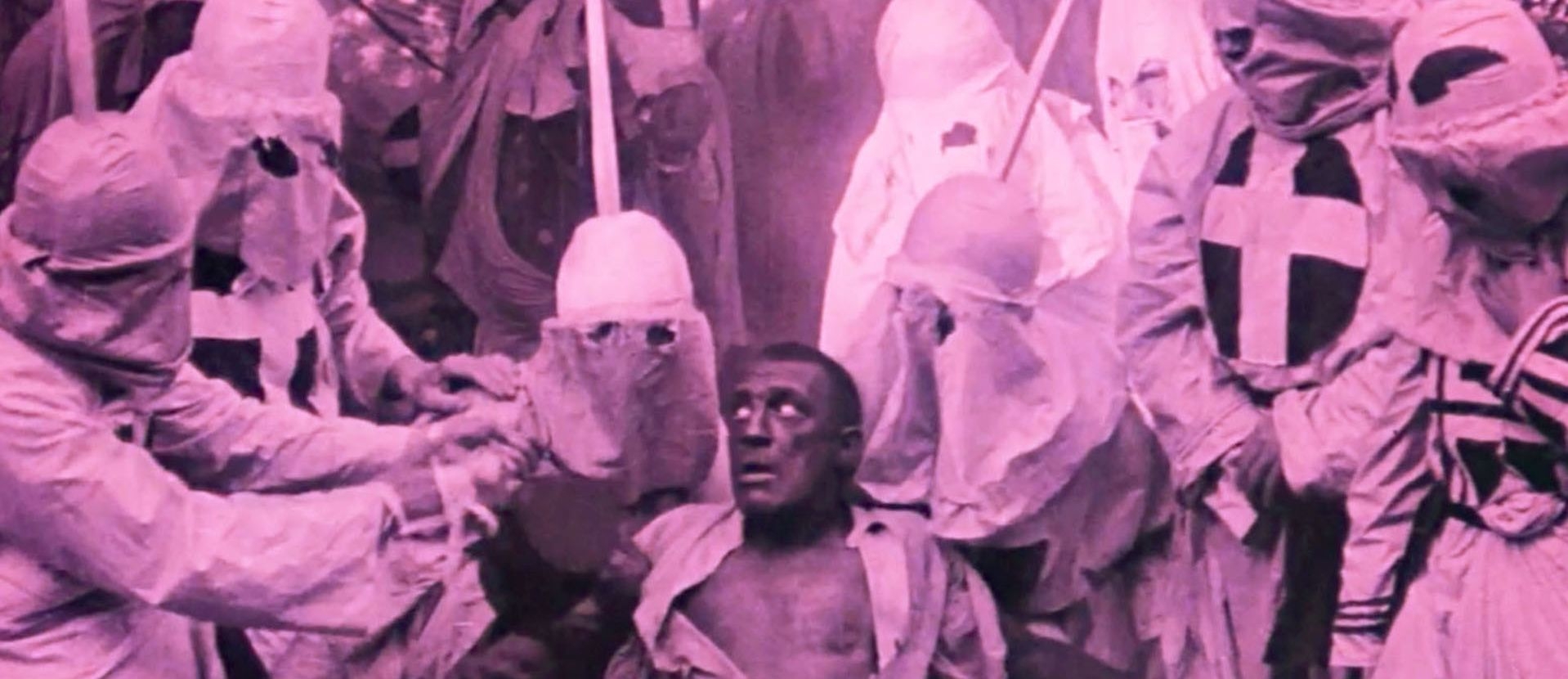
In 1915, Boston-based African American newspaper editor and activist William M. Trotter waged a battle against D.W. Griffith’s technically groundbreaking but notoriously Ku Klux Klan-friendly The Birth of a Nation, unleashing a fight that still rages today about race relations, media representation, and the power and influence of Hollywood. Birth of a Movement, based on Dick Lehr's book The Birth of a Movement: How Birth of a Nation Ignited the Battle for Civil Rights, captures the backdrop to this prescient clash between human rights, freedom of speech, and a changing media landscape.
Read More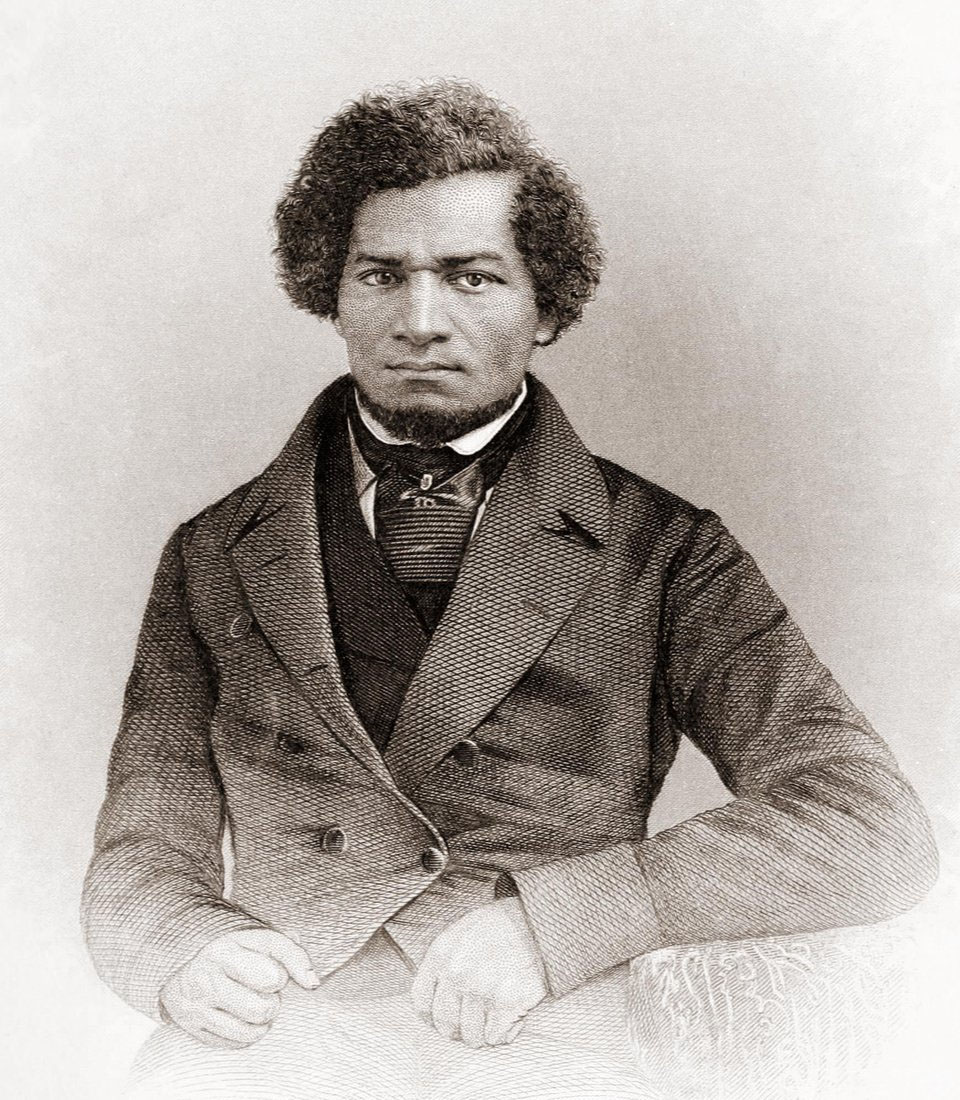
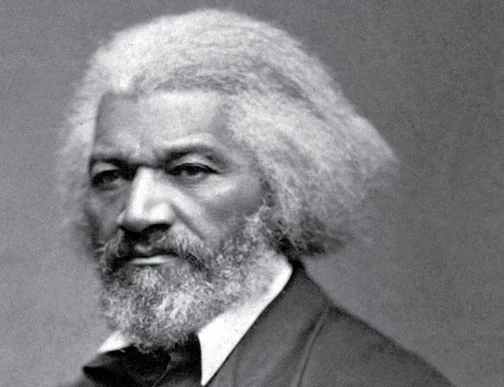
Frederick Douglass, author, orator, editor, and most important African American leader of the 19th century, was a dangerous illegal immigrant. Well, in 1838 he escaped a thoroughly legal system of enslavement to the tenuous condition of fugitive resident of a northern state that had outlawed slavery, but could only protect his “freedom” outside of the law.
Read MoreDavid Blight gave the Biddle Memorial Lecture at Harvard Law School on November 9, 2016. His lecture, “DOUGLASS! DOUGLASS! Writing the Life of Frederick Douglass: Why, and Why Now?” was moderated by Tomiko Brown-Nagin, Daniel P.S. Paul Professor of Constitutional Law at Harvard Law School.
To view video: https://www.youtube.com/watch?v=TN3jo7TPs8o
Read MoreOpera singer Andrea Baker explores the impact of Frederick Douglass and the time he spent in Scotland, the country which she's made her home. As the great-granddaughter of slaves, she's always been inspired by Douglass, who escaped slavery to become an abolitionist and social reformer but, until now, was unaware of the impact he'd had on Scotland and vice versa.
Listen to audio: http://www.bbc.co.uk/programmes/b06kb0g2
Read More